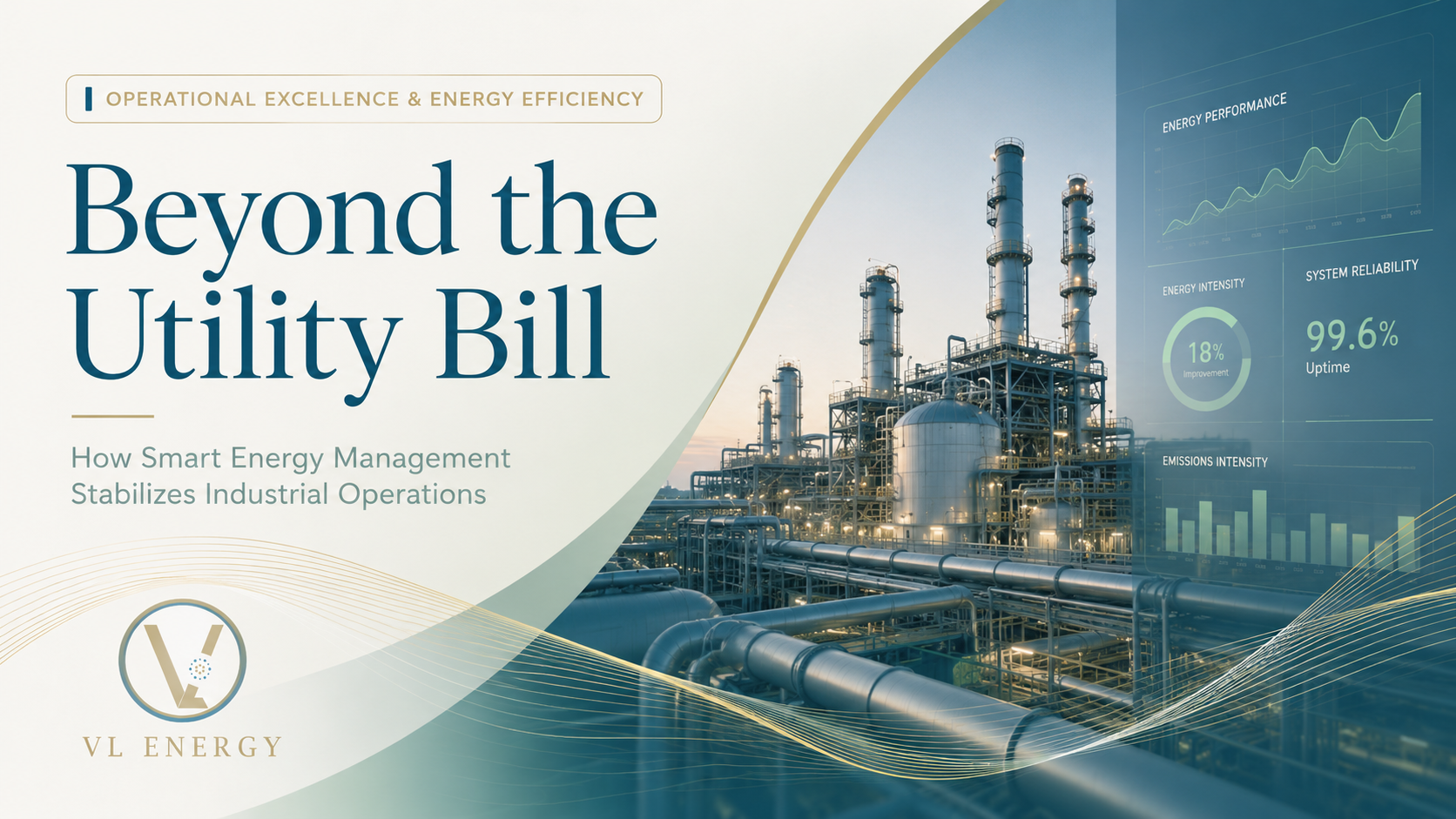
For decades, energy management in heavy industry has often been treated as a back-office accounting task — a passive exercise focused on checking utility bills, tracking monthly consumption, or meeting corporate sustainability targets. But for plant managers and operational leaders, the phrase "energy efficiency" can sometimes sound like a compromise. It may imply slowing down production, turning off equipment, or risking throughput just to reduce power costs.
In continuous process industries across Canada — including thermal processing, manufacturing, oil and gas, and other energy-intensive operations — slowing down is not an option. The real value of modern, engineering-driven energy management is not about cutting back. It is about making operations smoother, more reliable, and more predictable.
An inefficient electrical or thermal process is often an unstable one. It can create unnecessary equipment wear, increase maintenance risk, drive avoidable energy costs, and even affect final product consistency.
When facilities move beyond simply paying the utility bill and begin actively monitoring internal energy performance, energy management becomes more than a reporting function. It becomes an operational excellence tool.
Smoothing Out the Peaks to Protect Critical Equipment
One of the most immediate benefits of structured energy management is helping critical machinery run more steadily. In heavy industrial environments, large motors, pumps, compressors, crushers, and thermal systems often experience abrupt starts, stops, and load changes as operators respond to process conditions, production schedules, or electricity price signals.
In provinces such as Alberta, electricity costs can also be heavily influenced by regional grid peaks, including Coincident Peak demand events. Hitting these peaks can significantly increase a facility's transmission-related charges. With smart energy management software, facilities can forecast high-demand periods, identify load patterns, and plan operational adjustments before costly peaks occur.
From a maintenance perspective, this matters. Reducing sudden demand spikes and unnecessary equipment cycling helps lower electrical stress, reduce heat-related damage, and limit mechanical wear on motors, gearboxes, belts, bearings, and other critical assets. A smoother power profile supports a more stable production line.
Making Smarter Use of the Data You Already Have
True energy efficiency means matching equipment energy use to the real needs of the process. In many older or partially upgraded facilities, fixed-speed equipment still runs continuously at or near full capacity, while valves, dampers, or manual controls are used to restrict output. This approach wastes energy and creates unnecessary system strain.
Modern Energy Management Information Systems, such as VL Energy's ES-OptiEnergy, can help facilities use the data they already have more effectively. Instead of requiring expensive new meters on every piece of equipment, ES-OptiEnergy can connect with existing systems such as:
- SCADA systems
- PLCs
- Smart meters
- Motor control centers (MCCs)
- Variable frequency drives (VFDs)
- Equipment tags
- Utility data sources
By analyzing equipment runtime, motor information, operating conditions, production data, and energy profiles, the platform helps operators better understand how energy is being used across the facility. This visibility allows operations teams to fine-tune control strategies, identify waste, monitor energy intensity, and match equipment performance more closely to live production demand.
The result is not only lower energy consumption. It is a more balanced, stable, and efficient industrial operation.
The Operator's Advantage: Reliability, Quality, and Longer Equipment Life
When industrial equipment operates steadily within its optimal range, the benefits go far beyond energy savings.
1. More Consistent Product Quality
In continuous processing environments, sudden changes in equipment speed, flow, pressure, or temperature can create inconsistencies in production. A more stable, energy-optimized process helps support better raw material handling, more consistent operating conditions, and more predictable output quality.
2. Earlier Maintenance Warnings
Energy data can also act as an early warning system. When facilities track energy use per unit of production — for example, kWh per tonne processed — a sudden increase in energy intensity can signal a developing mechanical issue.
If a pump, fan, compressor, or motor suddenly requires more power to deliver the same output, the system may be revealing a problem such as a worn bearing, clogged line, fouled filter, poor alignment, or control issue. In many cases, energy data can help maintenance teams identify performance degradation before it becomes a costly breakdown.
3. Longer Electrical Infrastructure Lifespan
Stable energy use also helps protect major electrical assets. When demand spikes are reduced and power distribution is better managed, electrical rooms run cooler, transformers experience less thermal stress, switchgear faces fewer high-current events, and cables are less exposed to voltage drops or overload conditions. This can help extend the life of some of the facility's most expensive infrastructure.
Taking Control of the Industrial Energy Footprint
Real-time energy data is no longer just a tool for monthly reporting. It is becoming a core part of operating a stable, modern industrial facility. By treating energy as an active operational variable, industrial operators can:
- Detect abnormal consumption
- Identify utility billing errors
- Track true production costs
- Reduce peak demand exposure
- Improve equipment reliability
- Support emissions and sustainability reporting
- Protect assets from grid and process volatility
At VL Energy, our ES-OptiEnergy platform is designed to connect day-to-day plant operations with financial, energy, and sustainability targets. By automating baseline analytics and delivering clear, practical insights, ES-OptiEnergy helps industrial facilities eliminate operational blind spots, safeguard critical machinery, and turn energy data into a real competitive advantage.
Energy management is no longer just about reducing utility bills. It is about building stronger, smarter, and more resilient operations.
Ready to see what your energy data can do? Discover how VL Energy's ES-OptiEnergy platform can help your facility use existing SCADA and energy data to stabilize operations, reduce peak demand risk, and improve performance. Request a demo today.