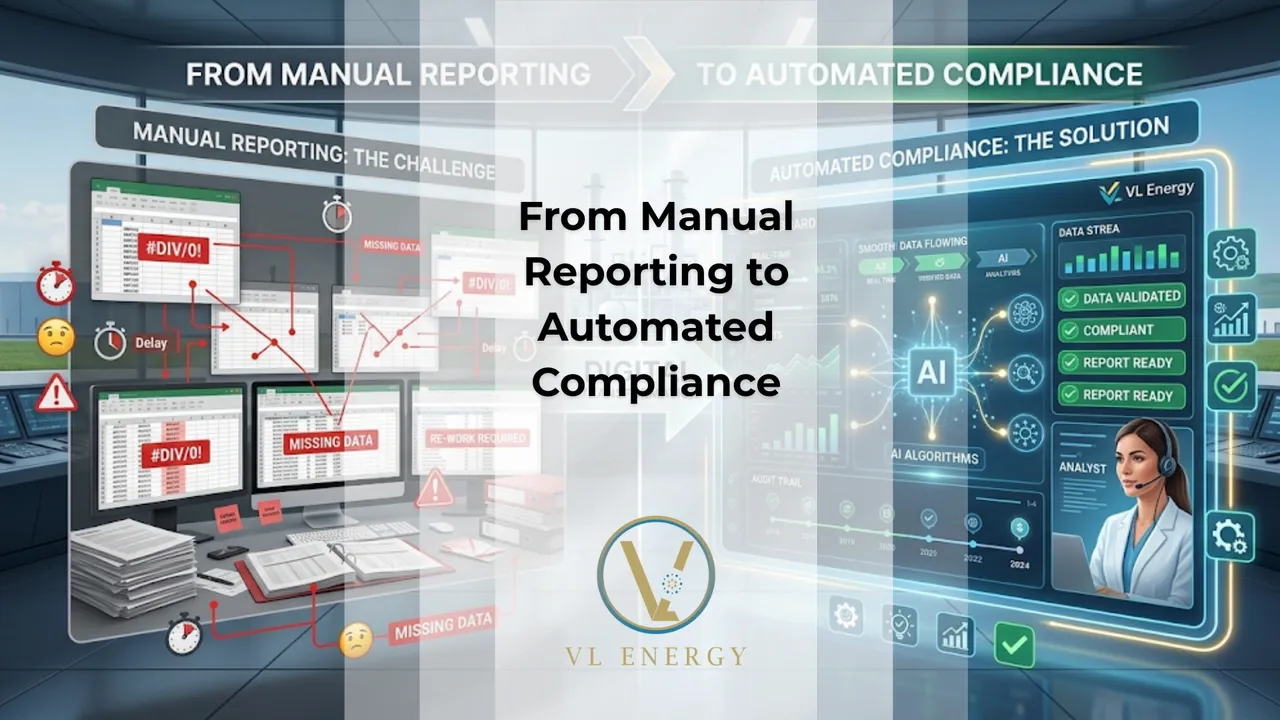
Environmental and operational reporting has become a critical part of the modern energy business. Operators are expected to manage emissions data, equipment performance, regulatory obligations, and internal reporting with a high level of accuracy and transparency. However, many facilities still rely on manual reporting workflows that were not designed for today’s volume of data or level of compliance complexity.
At VL Energy, we see automation not simply as a technology upgrade, but as a way to build a more reliable, auditable, and scalable compliance process. Moving from manual reporting to automated compliance can help energy operators reduce reporting risk, improve data confidence, and turn compliance data into practical operational insight.
The Current Challenge: Manual Reporting in Energy Operations
In a typical manual reporting process, data may come from multiple equipment systems, field logs, spreadsheets, historian exports, lab results, and operator notes. Teams often need to consolidate this information, apply formulas, review exceptions, and prepare monthly or quarterly reports for internal review or regulatory submission.
While this approach may work for a small facility or a limited number of assets, it becomes difficult to manage as operations grow. The more data sources, reporting periods, and calculation rules involved, the greater the risk of inconsistencies.
- Multiple Data Sources: Emissions data, fuel data, equipment status, runtime information, and process conditions may be stored in different formats or systems.
- Manual Calculations: Spreadsheet formulas and manual inputs can create errors that are difficult to detect until late in the reporting cycle.
- Limited Traceability: When values are copied, adjusted, or recalculated manually, it can be difficult to track where a number came from and why it changed.
- Delayed Review: Reports may only be reviewed at the end of the month or quarter, which means abnormal trends or missing data may be discovered too late.
- Audit Risk: Without a clear audit trail, companies may spend additional time proving that the data, assumptions, and calculations are correct.
Example: A facility may spend dozens of hours each month consolidating emissions and operational data. If one spreadsheet tab contains an outdated formula or one missing-data event is not properly flagged, the entire report may require additional review.
The Turning Point: Automating the Compliance Workflow
Automated compliance software changes the reporting process by standardizing how data is collected, validated, calculated, reviewed, and reported. Instead of relying on disconnected spreadsheets and manual checks, operators can use a centralized platform to manage compliance logic and reporting outputs more consistently.
This does not remove the need for human review. In fact, it makes review more valuable. Teams can spend less time searching for data and more time understanding what the data means.
1. Centralized Data Collection
Automation starts with bringing approved data sources into one controlled environment. This may include sensor data, equipment status, fuel usage, emissions estimates, maintenance information, and reporting metadata.
When data is centralized, teams no longer need to manually combine multiple spreadsheets or exports. The system can maintain consistent timestamps, data definitions, and source references.
Example: Instead of collecting separate files from operations, engineering, and environmental teams, a facility can use one dashboard to view source data, calculated values, exceptions, and report status.
2. Standardized Calculation Logic
Regulatory reporting often depends on specific calculation rules, operating conditions, data availability requirements, and exception handling. In a manual workflow, these rules may be interpreted differently by different users.
With automated compliance software, calculation logic can be built into the system and applied consistently across reporting periods. This reduces the chance of formula drift, outdated assumptions, or inconsistent treatment of missing data.
Example: If a reporting rule requires a defined method for handling missing data or partial operating periods, the system can flag the event, apply the approved method, and retain the supporting record.
3. Real-Time Exceptions and Alerts
Manual reporting often identifies problems after the fact. Automated systems can identify missing values, out-of-range readings, abnormal trends, and calculation exceptions earlier in the process.
This creates a more proactive compliance workflow. Instead of waiting until month-end, teams can address issues as they occur and reduce the risk of last-minute corrections.
Example: If an emissions value is outside an expected range or a data stream stops updating, the system can notify users immediately so the issue can be investigated before it affects the final report.
4. Audit Trails and Version Control
A strong compliance process needs more than accurate numbers. It also needs evidence. Automated systems can record when data was received, when calculations were performed, who reviewed results, and what changes were made.
This audit trail supports internal quality control and helps companies respond more efficiently to external reviews, client inquiries, or regulatory questions.
Example: Instead of manually explaining why a value changed between draft reports, users can review the system history and see the source data, calculation logic, review comments, and approval status.
5. Report-Ready Outputs
One of the biggest benefits of automation is the ability to generate consistent, report-ready outputs. This can include monthly data files, compliance summaries, exception logs, management dashboards, and internal performance reports.
When the output format is standardized, teams can reduce repetitive formatting work and focus on final review, interpretation, and decision-making.
Example: A monthly compliance report can be generated from validated data, with flagged exceptions and supporting details already attached for review.
Manual vs. Automated Compliance: A Side-by-Side Comparison
| Aspect | Manual Reporting | Automated Compliance |
|---|---|---|
| Data Collection | Multiple files, exports, and manual consolidation | Centralized data from approved sources |
| Calculations | Spreadsheet formulas and manual interpretation | Standardized rules applied consistently |
| Exception Handling | Often identified late in the reporting cycle | Flagged automatically for earlier review |
| Traceability | Limited visibility into changes and assumptions | Audit trails, source references, and review history |
| Reporting Speed | Time-consuming monthly or quarterly preparation | Report-ready outputs generated from validated data |
| Compliance Risk | Higher risk of missed errors or inconsistent methods | Reduced risk through validation and controlled workflows |
Why Automated Compliance Matters
Automated compliance is not only about saving time. It is about building a stronger foundation for environmental management and operational accountability.
- Compliance Confidence: Standardized workflows help reduce reporting errors and improve confidence in submitted data.
- Operational Efficiency: Teams spend less time preparing spreadsheets and more time reviewing insights and resolving issues.
- Data Governance: Clear source references, validation rules, and audit trails make compliance data easier to manage.
- Proactive Management: Early alerts help teams identify missing data, abnormal trends, and potential compliance concerns before they become larger problems.
- Scalability: As assets, facilities, and reporting requirements grow, automated systems can support consistent reporting across the organization.
For energy operators, the shift from manual reporting to automated compliance represents a practical step toward stronger data quality, lower reporting risk, and better operational decision-making. As regulatory expectations continue to evolve, companies with reliable digital compliance systems will be better prepared to adapt, respond, and operate with confidence.
Discover how VL Energy can help your facility move from manual reporting to automated compliance with smarter emissions monitoring, data validation, and report-ready workflows. Contact our team to learn more.